Bringing Precision to eCAD
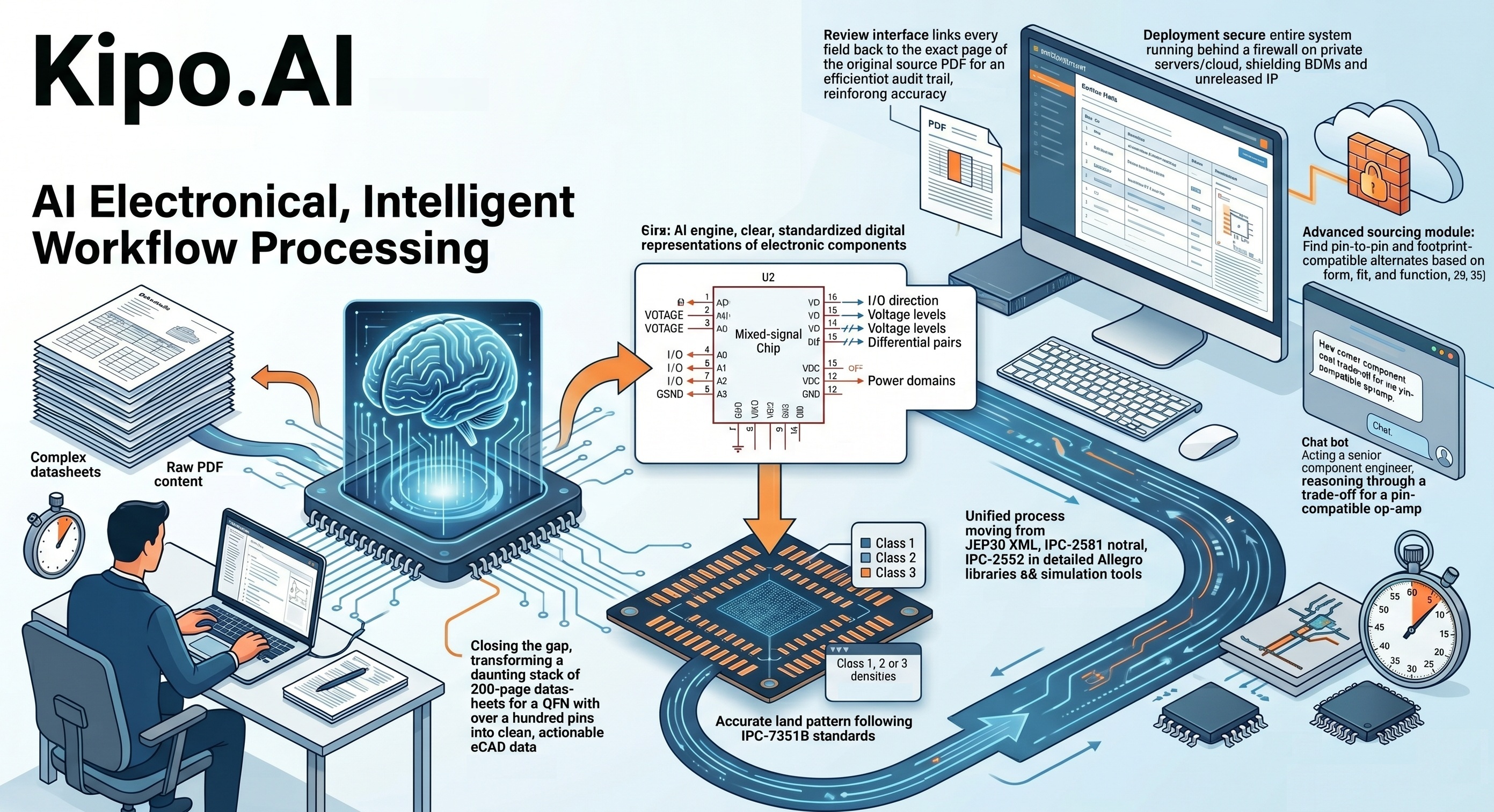
Kipo AI targets one of the oldest bottlenecks in PCB design turning a 200-page datasheet into a trusted, audit-ready library part. By standardising on JEP30 XML and IPC-7351B land patterns, it collapses the gap between the datasheet and the Allegro library into a single, verifiable flow.
Faced with a 200-page datasheet for a QFN with over a hundred pins and a non-negotiable deadline, most PCB engineers feel the same pressure. Library teams are often buried, causing schedules to slip while designers wait for parts. This is the exact gap Kipo AI aims to fill. Rather than focusing on typical AI hype, Kipo addresses a long-ignored industry problem: making datasheets truly machine-readable.
Moving Beyond Vendor Lock-in with JEP30
Most eCAD libraries are restricted to specific EDA vendor formats. Kipo breaks this cycle by supporting native format and also JEP30 XML, the …
Unlock Full Article
Log in with your Google account to read the complete article and join the ECAD Bridge community.
Continue with Google
— Article from E-Cad Bridge —